
Hajar, 30, arrives home to Cape Town, from Hajj and after teaching English in the Middle East. She grapples with her dying mother, the undecided future of her teenage siblings Shihaam & Shihaabudien, and Ameer, her childhood best friend with whom she’s in love. Will Hajar jump ship and sign her new contract to return abroad, or will she stay in her place of origin, marry Ameer and carry her Hajji title with pride?
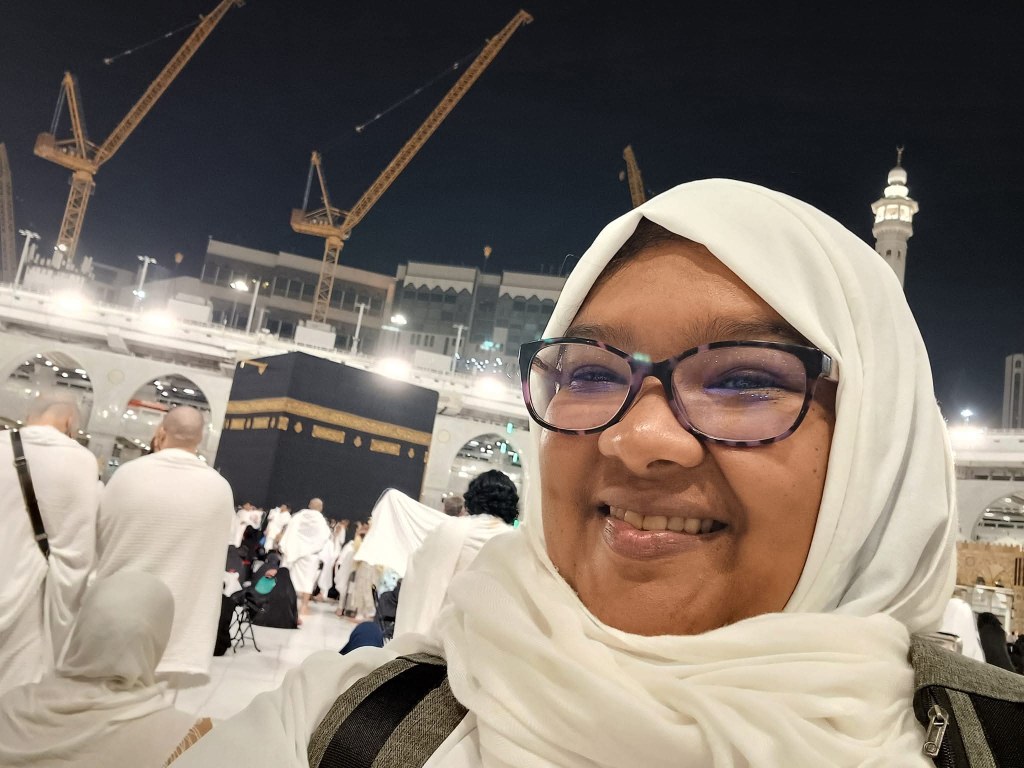
Let’s chat with local playwright, and fellow radiohead, Tasneem Daniels (Miela’s Box, Die Burger, LitNet, Suidooster and LIVE FM Radio) about the latest theatre installment in her repertoire – Love in the time of Labarang Hajj.
♥️What are your favorite traditions around hajjis/Hajj season?
The aesthetics around the Cape Hajj customs and traditions never fail to fascinate me.
The smell of ‘atar’ (perfume) from Makkah and the Hajji’s dressed in their Midowrah’s. Even better when the Hajji’s have offerings for us in the form of Zam Zam water in the tiny glasses, and mebos and dates on a stick!
I always listen out for the Hajji’s who have special stories to tell when they come home. Salaam Al Hujaaj is still, to date, my favourite Qaseedah taught to me by the late Mualimah Mareldiah Stemmet at madrassah in primary school. She had a very lovingly reprimanding way about instilling Islam in us children.
Each time I think of her, I listen to the Al Ahly Thikr Jamaah‘s cover of Salaam Al Hujaaj:
♥️A Muslim love story…does this play marry aspects of a romcom with Islamic values?
I love the idea of a Muslim-based romcom, but I’ll let the audience decide these things for themselves upon attending the play reading on 18 November.
The love story is between 2 characters who are childhood best friends who just happen to be Muslim. Islamic values are not imposed on the characters or the story, or even its audience, because it doesn’t have to be imposed.
You know you’re walking into an Islamic story world the minute you see the title of the play reading, and in the first scene. It is the humanity of the 2 characters, and the emotional journey, that we’re following. Both of them are loners, the eldest of their families and afraid of putting themselves out there.
Even if an audience member is unfamiliar with Islam and Hajj, a love story is something audiences everywhere can relate to and enjoy.
At the end of the day writing is listening, and I learn a lot when I listen.
♥️Which character did you have the most fun developing?
The lead character’s mischievous twin siblings, Shihaam & Shihaabudien. I’m not familiar with twins, and I was fascinated by how these two hooligans revealed themselves in the writing!
♥️What was the hardest part about writing this play?
Staying true to the emotional authenticity of the characters.
I was taught at the UWC Creative Writing department, the line by Grace Pailey, that “all characters deserve an open destiny of life”. No person is completely good or completely bad, likewise with story characters.
Sometimes the playwright is challenged when emotions heighten, or when you meet a character that challenges your biases. Also, to balance the religious history with the humanity witnessed on stage. All these I welcome as happy challenges.
At the end of the day writing is listening, and I learn a lot when I listen.
I also hope that the depth of Cape Muslims and our traditions are appreciated more through this play
♥️What is your relationship with Labarang Hajj? Why did you decide to centre the play around this time of the year?
Muslim stories have become trendy in South African TV, and media entertainment worlds in the last few years.
Labarang (Eid) is a widely known tradition, particularly the Labarang that follows Puasa (Ramadaan). But often, its only about food and the depth of the religious tradition goes unspoken. Almost always, the media stereotypes our Cape Labarang traditions as that which only comes out of the colourful houses of Bo-Kaap.
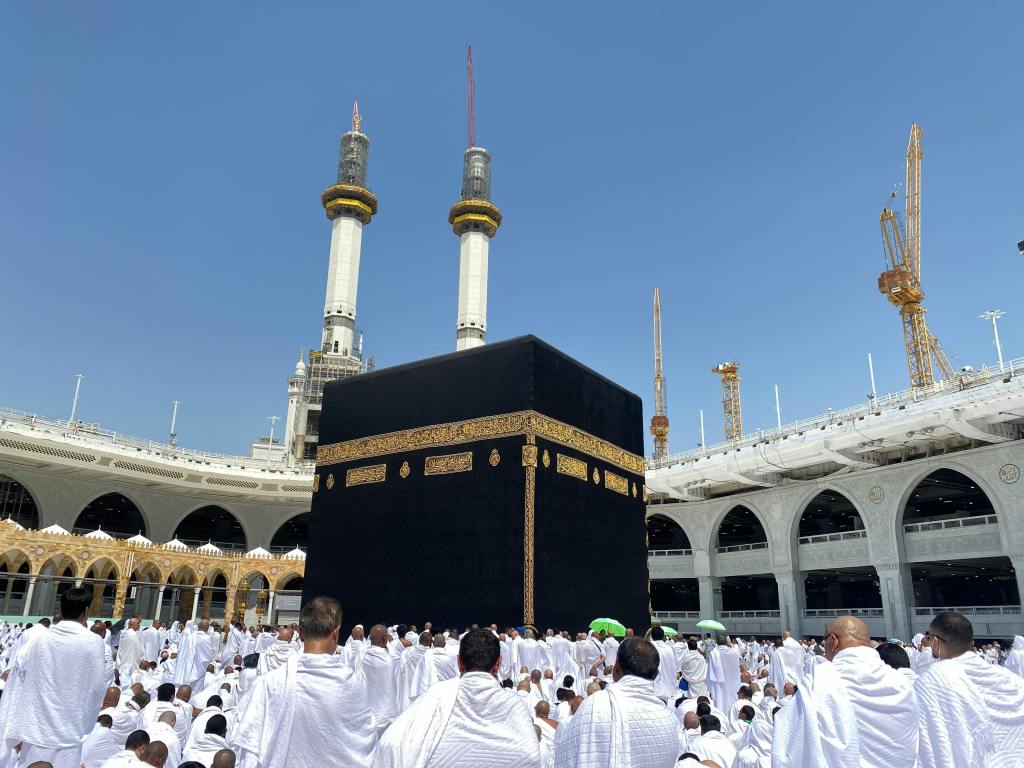
Labarang Hajj is a religious event, with Hajj as the fifth pillar of Islam as its centre. It’s come with its own aesthetics yes, but also, it comes with a history and lessons.
Most importantly, the lesson that the lived experiences of Hajar (AS), the wife of Ibrahim (AS) and mother of Ismaeel (AS), is so central to the Hajj & Umrah rituals. You’d expect the emphasis of Hajj education to place more focus on Hajar’s lived experiences, but it doesn’t. Love in the time of Labarang Hajj seeks to change this narrative.
Alhamdulilah, I’ve made intention to go on Hajj and I’ve been on Umrah 3 times, once with my parents and twice on my own while I was working in Saudi. Women from our generation who find the means to go on Hajj through work abroad opportunities is a new rite of passage I was keen to explore.
♥️What do you hope audiences will enjoy most, or take away from this play?
The fact that Hajar (AS) should be honoured tons more than what she is currently in Islamic educational spaces.
I also hope that the depth of Cape Muslims and our traditions are appreciated more through this play, and that the theatrical value of prioritizing these stories on an industry level are taken into account.
A table read of Love in the Time of Labarang Hajj will take place at the Masque Theatre in Muizenberg, 18 November 2025, 7pm – 9pm.
A feedback session with a panel of experts will take place after the table reading. Book your tickets on The Masque’s website.


One thought on “‘Love in the time of Labarang Hajj’ a creator convo with Tasneem Daniels”